Sunday, August 14, 2011

Licked by Tina Turner


A couple of weekends ago I was at the San Rafael farmers market. When I stopped by the information booth I noted they were offering free copies of a map entitled “Explore the Sonoma Marin Cheese Trail – A Guide to Sonoma and Marin Cheesemakers.” You can go here to find a story about the map – put out by the Marin Economic Forum – and to download a PDF copy of the map. Thanks to the MEF and the other sponsors for this valuable resource.


When I got home that morning and sat down to look over the map I expected that I would recognize all of the places on the map. There were certainly a number that I knew well, but also a number that I did not. However, one in particular, caught my eye – Ramini Mozzarella – in part because that was the only one on the map that used a “W” in the “Type of Animal Category” – namely, water buffalo.


I have always liked mozzarella cheese, although almost all of that which one finds here in the US is made from cow’s milk. However, if you have ever had the real “mozzarella di bufala” made from water buffalo milk coming from the Italian region of Campania south of Naples, you know there is no comparison. Hence, the suggestion that we may have some locally produced mozzarella di bufala was pretty exciting.
Continue Reading »

Wednesday, July 6, 2011

Empanadas at Chile Lindo


I am afraid I have been very negligent about posting here.  Last year I became interested both in Chile and in Sausalito’s sister city relationship with the Chilean coastal city of Viña del Mar.  One thing lead to another, and now Virginia Reginato, the Mayor of Viña, is coming to Sausalito the week after next with a delegation of “Viñamarinos.”  I have been helping to coordinate that effort and it seems I have little time for anything else.


While I probably should be studying up on issues facing Chilean municipalities, my attention has instead, not unexpectedly, been drawn to matters of Chile's cuisine.  One thing I came across was Anthony Bourdain’s encounter with the famous Chilean “completo while on a visit to Viña during the filming of a “No Reservations” episode in Chile.  However, I have learned that the true national dish of Chile seems to be ……the empanada!


Continue Reading »

Friday, May 13, 2011

Fresh Pasta - A Class with Viola and Corrado


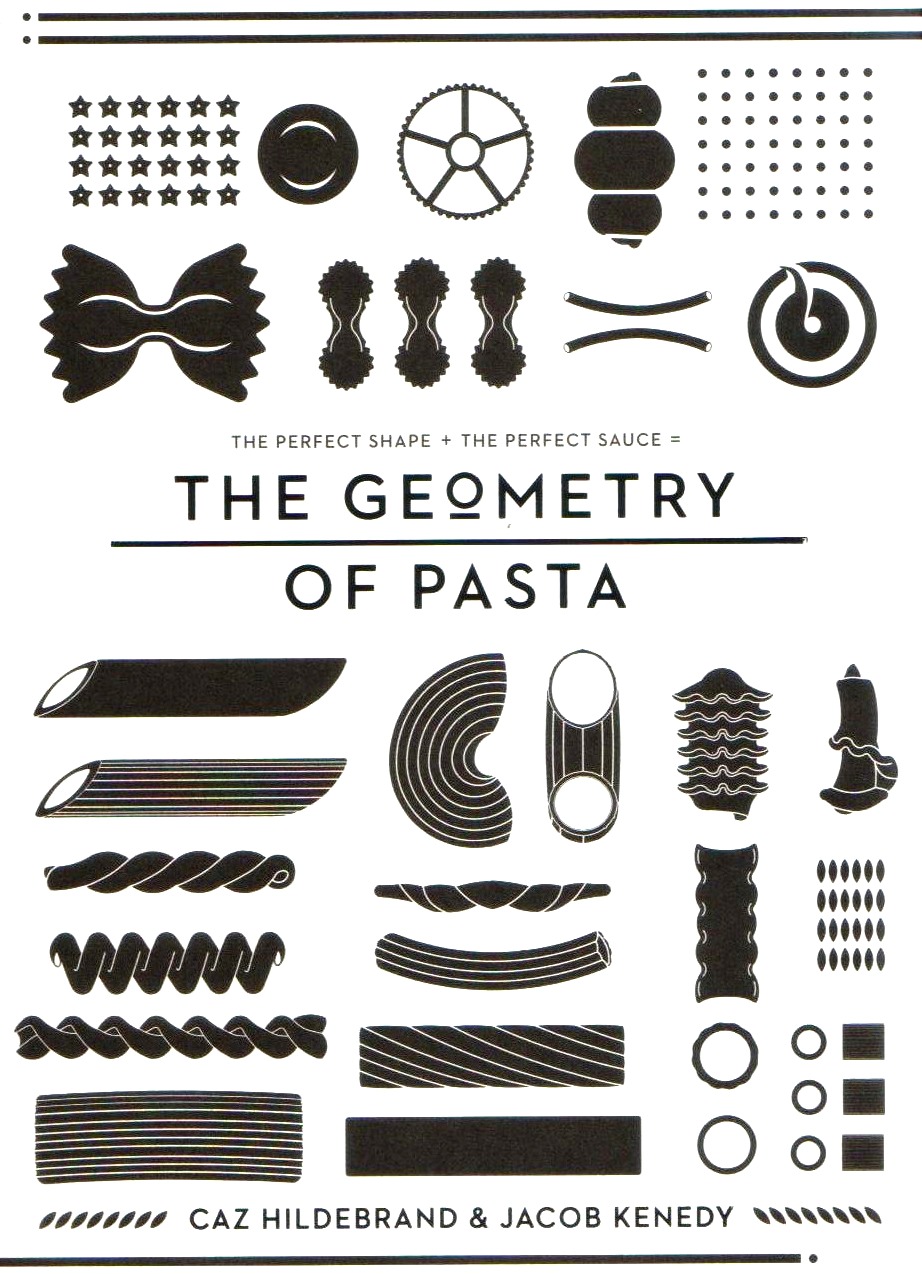
Pasta.  Yummm.  Is there any more iconic or better part of Italian cuisine?  Over my years of eating Italian food I have realized that while there are many excellent antipasti and secondi dishes, I always gravitate to the pastas included in the primi group.  In fact, in some cases I would be happy to have a couple of pastas to the exclusion of all else.  As reflected very well in “The Geometry of Pasta,” the shapes seem endless, and the sauce combinations infinite.

So, when at the beginning of last week I received an email from the Italian Cultural Institute (Istituto Italiano di Cultura) in San Francisco announcing a cooking class featuring my favorite cuisine (Pasta Fresca e Dintornian exploration of different kinds of fresh pasta and other handmade primi piatti from all over Italy”), it was a no-brainer.  I called the Institute, learned that there was still a space available, and signed up.
Continue Reading »

Saturday, May 7, 2011

Cinco di Mayo @ Cotogna


Although it may not have been culturally appropriate for the day, I was back at Cotogna for lunch on Thursday, the most recent of a number of recent visits. Is there any treatment available for pizza addiction?  Once again the dish was superb – the topping of the day was guanciale and ramps, with a whole egg added in the middle at the very end so it maintained its runny yolk.


The amazing thing was how well the flavors and textures were sequenced. First came the crust with just a touch of flour and char. Then the sweet tomato sauce and cheese kicked in, followed by the small rendered chunks of guanciale with their salty, porky notes and chewy element. And finally the slightly garlicky ramps added a bite at the end.
Continue Reading »

Thursday, April 28, 2011

Orechiette con ‘Nduja

Last night at my Italian class at the Museo ItaloAmericano (which is currently studying the Italian region of Basilicata), I gave a short talk about Peperoni di Senise, a red pepper that is grown in and around the town of Senise in the southeastern area of Basilicata. See this link for an interesting story about a chili fan’s visit to Senise.

In order to provide a bit more “flavor” for my presentation, I stopped by Barbacco on my way to class and picked up an order of their nduja. Nduja is a spreadable sausage with origins in Calabria, the region bordering Basilicata to the south, and which, at least in the Italian original, often incorporates Peperoni di Senise.


Rosetta Costantino, who teaches Calabrian cooking in Emeryville, and who last year came out with the wonderful cookbook, “My Calabria,” has done this blog post about ndjua. I have borrowed a couple of Rosetta’s photos from that blog to show just how much red pepper the real Calabrian ndjua contains!

I am afraid that Barbacco’s nduja may not measure up to Calabrian standards of spiciness, but it is spicy enough for me and is a wonderful dish.

After last night’s class there was a bit of nduja left over. Barbacco only serves its nduja as an appetizer with some toasted bread, and I had always wanted to try it as a pasta topping as Rosetta shows in her blog – mixed just with a bit of tomato paste. I did just that this evening with some orechiette (sorry, it’s a Pugliese pasta, but at least Puglia also borders on Basilicata). It could not have been easier, and the result was fantastic.

I highly recommend giving that a try!
Continue Reading »

Monday, April 25, 2011

Tremè – The 2nd Season is Finally Here!

Sometimes when you have been looking forward to something for a while the actual event does not measure up to expectations. However, last night’s debut on HBO of the 2nd season of Tremè did not disappoint. There may have been a few nits about which some might quibble (see, for example, the very good review by Matt Zoller Seitz in Salon), but overall in my view it was an excellent start to the new season.

A challenge with Tremè is that since the story lines and characters are so well-developed and inter-related, I think it would be impossible to jump into Season Two without investing the time to watch Season One first (and maybe even visit the Crescent City, which
we were able to do in March, to get your bearings) – there would just be too much one would miss. Also, even if you have watched Season One (in my case, three times for most of the episodes), you really need to concentrate on the program to keep track of all of the threads. This is not a program you can just have on while doing something else and expect to keep up.


Happily, last night’s episode is already on Comcast On-Demand and I expect to watch it a second time this evening to try and catch at least a few of the things I missed the first time through. There are also a couple of sites I have come across which I would recommend checking out for some useful background AFTER you have watched an episode. First, Dave Walker, who writes for The Times-Picayune, has a very helpful weekly Tremè Explained” column which, as the title suggests, provides a in-depth explanation of many of the subjects, places, food, music, etc. appearing in that week’s episode. Here’s just one tidbit from his column about last night’s episode:

“The youngster practicing the trumpet is Jaron "Bear" Williams, who is a member of The Roots of Music marching band, and will be featured in Richard Barber's upcoming documentary about the recovery of school music programs in New Orleans, ‘The Whole Gritty City.’”


One thing I love about Tremè is that it so full of detail that it provides a platform from which you can jump off to pursue threads running in many directions, as well as to identify NOLA organizations which deserve continuing support.

The second site I have come across is the
Watching Tremè blog which also includes a great deal of information and links to other sites.

The third site is the
Inside Tremè blog of Lolis Eric Elie, a NOLA native and friend who, among other related accomplishments, has written for the Tremè series and produced the excellent “Faubourg Tremè” documentary which provides yet further insight into the city and series.

Finally, like many others, I have found the music from the series captivating and it has led me to explore some genres and performers with which I previously had little experience (I even downloaded last night “From the Corner to the Block” performed by Galactic and the Dirty Dozen Brass band (also featuring Juvenile) after watching their Episode 1 performance filmed at Tipitina’s).

iTunes is also now offering a series of music videos featuring performers who have appeared on the series – my favorites so far have been John Boutté’s "At the Foot of Canal Street" and “Homage A Poullard” performed by the Pine Leaf Boys with Lucia Micarelli (who plays Annie Tee in the series).

The
Music of Tremè site is one of the best I found which provides detailed information about all music (even the many fragments) heard on the series. For the moment it just covers the episodes in the 1st season, although I assume they will keep it up for Season Two as well.

Finally, for your daily music NOLA music fix, there is nothing like
WWOZ – a really entertaining station which you can stream on your computer either directly or via iTunes. Also, if you have some time, Jazz Fest in NOLA is just starting.

If there are any other Tremè fans out there, I would welcome any suggestions of resources you may have found to enhance your viewing experience. In the meantime, laissez les bons temps rouler.
Continue Reading »

Friday, April 22, 2011

Roast Goat Shoulder with Black Olives and Herbs

One Sunday morning a couple of months ago while at the San Rafael farmers market I picked up a goat shoulder roast at the Rossotti Ranch stand. I had never cooked a goat shoulder before, but my prior efforts with Rossotti Ranch's goat had turned out so well that it seemed worth a try.

I had put the shoulder in the freezer and had forgotten about it until earlier this week when I happened across a recipe I had found on the Rossotti Ranch website (that and other good recipes are available
here). I made the dish this evening and it turned out very well. The shoulder - which is not a very big cut (mine was about 2 pounds) - includes a good deal of connective tissue and is chewy, but I like that consistency in meat and the flavor was excellent. Here's the variation of the recipe I used:


INGREDIENTS

• 1 goat shoulder roast, 2-3 lbs
• Salt & ground pepper
• 1 large carrot, peeled and diced
• 1 celery stalk, diced
• 1 small yellow onion, chopped
• 4 cloves garlic, sliced
• 5-6 fresh flat-leaf parsley sprigs, plus 2 tablespoons chopped
• 2 or 3 fresh oregano sprigs
• Extra virgin olive oil for coating
• 2 cups beef broth
• ½ cup dry red wine
• 10-12 kalamata olives, pitted and coarsely chopped
• 2 tablespoons capers, rinsed and chopped
• 1 tablespoon tomato paste
• 1 teaspoon red wine vinegar
• 1 tablespoon cornstarch

PREPARATION

1. Trim away all but a thin layer of fat from the goat. Rub the meat all over with the salt and pepper, place on a plate, and refrigerate for 12-24 hours. Remove from the refrigerator about 1 hour before roasting.

2. Preheat the oven to 400°F

3. Select a heavy ovenproof pan just large enough to hold the goat. Add the carrot, celery, onion, garlic, parsley sprigs, and oregano to the pan. Lightly brush or rub the goat with olive oil and place, fat side up, on the vegetables. Pour in the broth and wine.

4. Roast the goat for 1 hour. Remove from the oven and turn the roast. Reduce the oven temperature to 325°F. Continue to roast the goat for 20 minutes, then remove the pan from the oven and turn the roast again fat side up. Continue to roast until a thermometer inserted into the thickest part registers 180°F, 20 minutes longer.

5. Remove the pan from the oven, transfer the goat to a warmed platter, and tent with aluminum foil. Let rest while preparing the sauce.

6. Pour the contents of the pan through a coarse sieve placed over a bowl. Using the back of a spoon, press on the contents of the sieve to extract as much liquid as possible. Discard the contents of the sieve. Using a spoon, remove as much fat from the surface of the pan juices as possible. You should have about 1½ cups of liquid. Pour into a saucepan and place over medium-high heat. Bring to a boil and add the olives, capers, tomato paste, vinegar, and chopped parsley. Reduce heat to low. In a small bowl, dissolve the cornstarch in 2 tablespoons water and whisk into the simmering sauce. Cook, stirring, until slightly thickened, 2-3 minutes. Season to taste with salt and pepper. Keep the sauce warm.

7. Transfer the goat to a carving board. Cut the meat into slices ¾ – 1 inch thick and arrange on warmed plates. Spoon a little of the sauce over the meat. Pass the remaining sauce at the table.
Continue Reading »